
"Our integration with the Google Nest smart thermostats through Aidoo Pro represents an unprecedented leap forward for our industry."
- Antonio Mediato, founder and CEO of Airzone.
Healthcare leaders are being asked to improve outcomes, protect patient data, reduce operational pressure, and deliver digital experiences. Cloud computing in healthcare is one of the most practical ways to meet those expectations.
In 2026, the cloud is no longer just an IT infrastructure choice. It is becoming the foundation for connected patient care. It helps healthcare organizations securely store, access, analyze, and exchange healthcare information across systems.
The value is simple: cloud computing helps the right care team access the right patient information at the right time. That leads to faster decisions, better coordination, stronger engagement, and more personalized care.
Cloud computing in healthcare means using secure internet-based platforms to manage healthcare data and applications instead of depending only on local servers. These platforms can support electronic health records, patient portals, telemedicine, remote patient monitoring, medical imaging, clinical research systems, healthcare analytics, and AI-enabled tools.
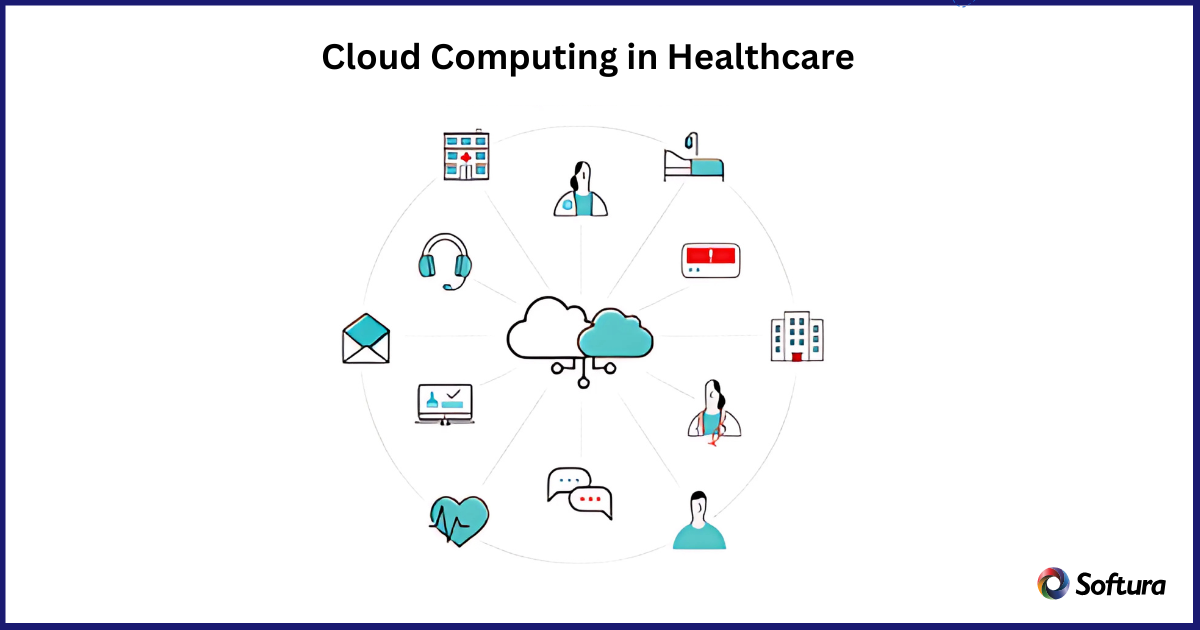
For C-level leaders, the cloud is best understood as a way to move from disconnected systems to connected care. A patient may visit a physician, complete lab work, consult a specialist, use a wearable device, and check results through a portal. If these touchpoints are not connected, care becomes slower and less consistent. Cloud-based healthcare systems help bring them together so providers can work with a more complete patient view.
"Our integration with the Google Nest smart thermostats through Aidoo Pro represents an unprecedented leap forward for our industry."
- Antonio Mediato, founder and CEO of Airzone.
Healthcare is becoming more digital, data-heavy, and patient-driven. Patients expect online scheduling, virtual visits, test results, reminders, and secure communication. Clinicians need complete information without waiting for manual record transfers.
Interoperability is also becoming a major priority. FHIR helps healthcare systems exchange data in a more consistent way through secure APIs, while TEFCA supports broader trusted health information exchange in the United States. This makes cloud readiness important for secure, scalable data sharing.
Cybersecurity is another driver. Healthcare organizations face increasing risk from ransomware, breaches, and downtime. A properly designed cloud environment can support encryption, multi-factor authentication, role-based access, monitoring, backup, and disaster recovery.
AI is also pushing healthcare toward the cloud. AI tools need secure, connected, high-quality data to support documentation, diagnostics, analytics, and patient engagement. Without a strong cloud foundation, AI remains limited by fragmented data.
"By analyzing the data from our connected lights, devices and systems, our goal is to create additional value for our customers through data-enabled services that unlock new capabilities and experiences."
- Harsh Chitale, leader of Philips Lighting’s Professional Business.
One of the biggest barriers to better care is delayed access to patient data. A provider may need lab results, allergies, medications, imaging, and past diagnoses before making a decision. When that information is scattered across systems, care teams lose valuable time.
Cloud-based healthcare systems help authorized users access patient information faster and more securely. This can reduce duplicate testing, support faster diagnosis, and improve treatment decisions. For patients, it means fewer delays and a smoother care experience.
Many patients receive care from multiple providers. This is common in chronic disease management, post-surgical recovery, specialty care, behavioral health, and senior care. When systems do not communicate, handoffs become risky.
Cloud computing supports better coordination by helping providers, specialists, labs, pharmacies, and care teams work from connected information. This improves continuity of care, reduces gaps, and supports value-based care goals through better satisfaction and fewer avoidable delays.
Remote patient monitoring is one of the clearest examples of cloud computing improving patient care. Connected devices and wearables can track blood pressure, glucose levels, oxygen saturation, heart rate, weight, and activity. Cloud platforms collect and organize that data so care teams can monitor patients outside the hospital or clinic.
This shifts care from reactive to proactive. Instead of waiting for a patient to return with a complication, providers can identify warning signs earlier and intervene sooner.
Telemedicine has become a permanent part of healthcare delivery. Cloud computing supports virtual visits, digital intake, secure messaging, e-prescriptions, appointment reminders, patient portals, and follow-up communication.
Patients can access care more conveniently, and providers can manage follow-ups more efficiently. Virtual care works best when it connects to the broader patient record. Cloud integration helps ensure that notes, prescriptions, lab orders, and follow-up instructions become part of the complete care journey.
AI and analytics are becoming important in healthcare, but they depend on connected data. Cloud computing helps organizations bring together clinical, operational, claims, imaging, and patient-generated data in a secure environment.
With proper governance, analytics can help identify patients at risk of readmission, flag care gaps, monitor chronic conditions, and personalize outreach. AI can also support documentation, image review, administrative automation, and patient communication.
The goal is not to replace clinicians. The goal is to reduce manual burden and give care teams better information when decisions matter most.

"By analyzing the data from our connected lights, devices and systems, our goal is to create additional value for our customers through data-enabled services that unlock new capabilities and experiences."
- Harsh Chitale, leader of Philips Lighting’s Professional Business.
Interoperability means different healthcare systems can securely exchange and use patient information. In 2026, this is central to improving patient care.
FHIR helps systems share healthcare data in a consistent format. APIs act as secure digital connections between EHRs, patient apps, payer platforms, labs, and care management tools.
For executives, the value is clinical and operational. When information moves securely between systems, providers can make faster decisions, patients can access their records more easily, and organizations can reduce manual work.
Security is equally important because healthcare organizations manage protected health information, prescriptions, diagnoses, financial details, and personal identifiers. A strong healthcare cloud environment should include encryption, multi-factor authentication, role-based access, monitoring, backup, disaster recovery, and threat detection.
Zero Trust means no user, device, or system is automatically trusted. Every access request must be verified. Healthcare cloud systems should align with HIPAA, HITECH, HITRUST, GDPR, and other applicable requirements.
"By analyzing the data from our connected lights, devices and systems, our goal is to create additional value for our customers through data-enabled services that unlock new capabilities and experiences."
- Harsh Chitale, leader of Philips Lighting’s Professional Business.
Softura’s healthcare cloud experience shows how cloud-based systems can improve real workflows. For a wound care group operating across multiple health systems, Softura developed a cloud-based SaaS Wound Care EMR application that integrated with EPIC and Cerner, supported e-prescriptions, and included a secure patient portal.
Softura built a HIPAA-aligned cloud application hosted on Microsoft Azure for a private research university using Access databases and spreadsheets to manage clinical studies. The platform included role-based permissions, communication tools, and real-time analytics.
These examples show how healthcare cloud solutions can create a unified patient view, improve workflow efficiency, strengthen compliance, and support better communication across care and research teams.
Cloud computing in healthcare is transforming patient care because it connects data, systems, providers, and patients.
In 2026, healthcare organizations cannot rely on fragmented systems if they want to deliver faster, safer, and more personalized care. Patients expect digital access. Clinicians need complete information. Regulators are pushing interoperability. Cybersecurity risks continue to rise. AI requires secure and connected data.
For healthcare executives, the cloud is not just a technology upgrade. It is a strategic foundation for modern patient care.
Are you ready for your next project?
Softura helps healthcare organizations build HIPAA-aligned cloud applications, modernize legacy systems, integrate EMR platforms, develop patient portals, and improve care delivery.