
"Our integration with the Google Nest smart thermostats through Aidoo Pro represents an unprecedented leap forward for our industry."
- Antonio Mediato, founder and CEO of Airzone.
Let's be real, managing software development costs can be a real headache. You want a great product, but you also need to keep your budget in check. That's where outsourcing comes in. It's not just about finding cheaper labor; it's about being smart and strategic. In this post, we're diving into nine proven ways you can leverage software development outsourcing to save money without sacrificing quality.
Let's be honest, in the business world, every dollar counts. You're always looking for ways to maximize your budget and get the best possible return on your investment. So, what if I told you that one of the smartest ways to save money isn't by cutting corners, but by making a strategic financial move that's been proven to work?
That's where outsourcing comes in. It's a game-changer, not just for big corporations, but for any business looking to get more out of its budget. When you outsource your software development, you're not just finding a team to build your product; you're making a calculated decision that leads to significant financial benefits.
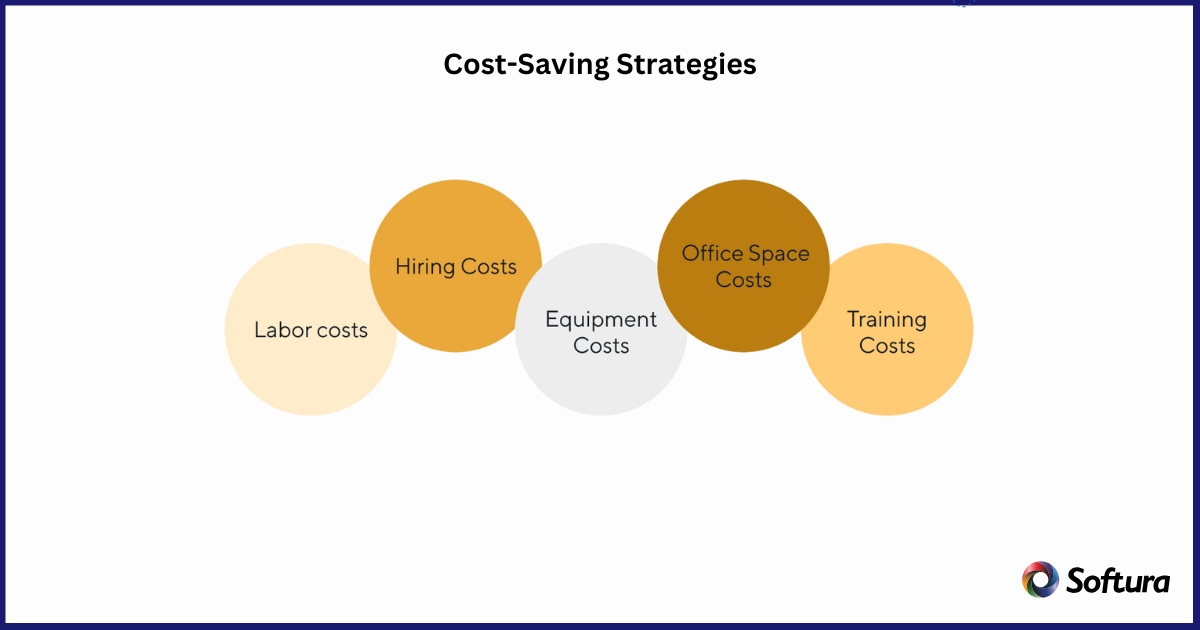
Think about it this way: building an in-house development team from scratch is a huge undertaking. You have to pay for salaries, benefits, office space, equipment, and training—all before a single line of code is written. With outsourcing, you can skip all that. You get access to a full team of experts without the costly overhead. You pay for the work you need, and nothing more.
This approach gives you a level of financial predictability that's hard to achieve with an internal team. You can define your project scope and budget upfront, so there are no surprises. It's about being lean, mean, and financially smart, allowing you to focus your resources on what truly matters: growing your business.
"Our integration with the Google Nest smart thermostats through Aidoo Pro represents an unprecedented leap forward for our industry."
- Antonio Mediato, founder and CEO of Airzone.
To truly get the most out of your budget when outsourcing, you need to be strategic from the get-go. This isn't about just finding the cheapest option; it's about making deliberate choices that lead to long-term savings and a better final product. The key is to start with a clear plan, identifying what your goals are, what you need to achieve them, and how you'll measure success.
Before you even start looking for a partner, you need to know exactly what you want to build. Create a detailed scope of work that outlines the features, functionalities, and technologies your project requires. Be specific about your deadlines and desired outcomes. The more detailed your plan, the less likely you are to encounter unexpected costs or delays down the road. This upfront work saves you money and headaches by preventing "scope creep," where the project expands beyond its original agreement.
Not all outsourcing contracts are the same. You can choose from various models, and the one you pick will significantly impact your budget. For smaller, well-defined projects, a fixed-price model can offer predictability. If your project is complex or its requirements might change, a time-and-materials model offers more flexibility. Understanding these options and choosing the one that best fits your project's needs and risk tolerance is a crucial part of maximizing your budget.
One of the biggest financial benefits of outsourcing is gaining access to global talent pools with different cost structures. Nearshore outsourcing (working with a team in a nearby country) can be great for close collaboration and similar time zones. Offshore outsourcing (working with a team in a more distant country) often provides the most significant cost savings. By carefully considering factors like time zones, cultural differences, and communication styles, you can find a team that delivers high-quality work at a fraction of the cost of hiring locally.
"By analyzing the data from our connected lights, devices and systems, our goal is to create additional value for our customers through data-enabled services that unlock new capabilities and experiences."
- Harsh Chitale, leader of Philips Lighting’s Professional Business.
Cut Costs Without Cutting Corners
Discover how outsourcing helps you reduce overhead, speed delivery, and maximize ROI—while maintaining quality and innovation.
When you’re looking for a partner to handle your software development, it's easy to get fixated on the numbers. We all do it—we see a low price and think, "jackpot!" But here's the thing: focusing only on the price tag can be a huge mistake, and it often costs you more in the long run.
Think of it like this: you're not just buying a product, you're entering a relationship. And just like any good relationship, this one needs trust, clear communication, and a shared vision. A partner who offers a rock-bottom price but lacks in these areas can lead to missed deadlines, communication breakdowns, and a final product that's buggy or doesn't meet your needs. In the end, you'll spend more time and money fixing their mistakes than you would have with a slightly more expensive but reliable team.
So, how do you look past the price and find a true partner? Start by asking the right questions. Don't just look at their rates; look at their track record. Do they have a portfolio of successful projects? Can they provide references? How do they handle communication and feedback? A great partner will be transparent about their process, eager to understand your vision, and will feel like a genuine extension of your own team. They'll care about the quality of the work, not just the number on the invoice.
Remember, a great partnership isn't about getting the cheapest deal; it's about getting the most value for your investment. By prioritizing communication, experience, and reliability, you'll find a partner who helps you build an amazing product and saves you from a lot of unnecessary headaches.
Once you've found the perfect outsourcing partner, the next step is to seal the deal with a contract that sets you up for long-term success, not just a one-time win. This is where you can bake in some serious savings, but it requires a strategic approach. This isn't just about agreeing on the price per hour; it's about building a framework that protects your budget and keeps your project on track for the long haul.
Think of your contract as a blueprint for your partnership. A well-written contract should be clear, detailed, and address potential issues before they even arise. For example, a great contract will include clauses on intellectual property rights to ensure the code you pay for belongs to you. It will also outline a clear process for making changes to the scope of work (change requests) and how these will be priced, preventing any unexpected fees down the line.
Another smart move is to negotiate for flexibility. Consider including clauses that allow you to scale your team up or down as needed, especially if your project has fluctuating workloads. For instance, you could negotiate a discounted rate for a larger team or agree on a notice period for adding or removing developers. This kind of flexibility ensures you're not paying for resources you don't need, which is a major win for your budget.
By being proactive and negotiating a contract that's as strategic as your business goals, you're not just securing a good price; you're creating a solid foundation for a successful and cost-effective partnership that will pay dividends for years to come.
The development lifecycle can feel like a marathon with a lot of potential potholes along the way. But by working with a great outsourcing partner, you're not just getting a team to code; you're getting experts who know how to navigate this marathon efficiently, which directly translates to significant cost savings. The goal is to make every step of the process as lean and productive as possible, from the first brainstorming session to the final product launch.
A key part of this is using modern development methodologies like Agile or Scrum. Instead of the old "waterfall" method where you plan everything at the beginning and hope for the best, these approaches break the project into smaller, manageable chunks called "sprints." This allows your team to deliver working software more frequently, gather feedback early, and make adjustments on the fly. This iterative process prevents you from investing a ton of time and money in a feature that no one actually wants, saving you from costly re-work later on.
Another way to optimize the lifecycle is by prioritizing thorough testing and quality assurance from the very beginning. It’s far cheaper to fix a bug in the early stages of development than it is to find and fix it after the software has been released to users. A good outsourcing partner will have a dedicated QA team that works alongside developers, ensuring code is clean and reliable. This proactive approach to quality prevents expensive post-launch patches and negative user feedback.
By focusing on these streamlined processes, an outsourcing team helps you avoid common pitfalls that inflate costs, such as project delays, scope creep, and unexpected bugs. They're constantly thinking about how to build the right thing, in the right way, from the very start, which is the ultimate form of cost-saving.
Finding the right outsourcing partner is a huge win, but your cost-saving efforts don't stop there. Once the partnership is underway, proactive management is key to ensuring you're getting the most value for your money. Think of it as steering a ship; a little course correction here and there prevents you from veering off-budget entirely.
First and foremost, clear and consistent communication is non-negotiable. Regular meetings—whether daily stand-ups or weekly check-ins—are crucial for monitoring progress and addressing issues before they become expensive problems. It's easy for small misunderstandings to snowball into a full-blown crisis, leading to missed deadlines and costly rework. By keeping the lines of communication open, you can ensure everyone is aligned on goals and priorities, preventing waste.
Another essential practice is to establish a system for monitoring project metrics. This isn't just about tracking hours; it's about evaluating performance. Are the deliverables being met on time? Is the team hitting its targets for each sprint? By having a clear dashboard for these metrics, you can spot potential bottlenecks and inefficiencies early on. If a certain part of the project is taking longer than expected, you can address it immediately rather than waiting for the budget to run out.
Finally, don't be afraid to provide feedback and celebrate small wins. A good partnership is a two-way street. By regularly sharing constructive feedback, you help your outsourcing partner improve their process and better meet your needs. When they do something well, acknowledging it builds morale and reinforces good habits, which in turn leads to a more efficient and productive collaboration. This kind of hands-on management ensures that your partnership remains a well-oiled, cost-effective machine throughout the entire project.
You've made smart choices, negotiated well, and managed your partnership efficiently. But how do you know if it's all working? The final, and arguably most important, step in your cost-saving journey is to measure your return on investment (ROI) and be willing to adjust your strategy as you go. This isn't just about looking at the numbers at the end; it's about continuously evaluating the partnership's value so you can make smarter decisions for the future.
Start by defining what success looks like for your project. Is it a reduction in development costs compared to an in-house team? Is it a faster time to market? Is it the launch of a new, revenue-generating feature? By setting clear, measurable goals from the beginning, you can track your progress and quantify the financial benefits of outsourcing. For instance, you can create a simple spreadsheet to compare the cost of your outsourced team versus what it would have cost to hire local talent for the same roles.
Equally important is staying flexible and open to change. The market, your business needs, and even your partnership can evolve. If you notice that a specific strategy isn't delivering the ROI you expected, or if a new technology becomes available that could save you money, don't be afraid to pivot. A good outsourcing partner will be a valuable source of information in this process, offering insights into new technologies and more efficient ways of working.
By regularly measuring your ROI and staying agile, you ensure that outsourcing remains a strategic financial advantage, not just a one-time experiment. It's about turning data into action, allowing you to fine-tune your approach, continuously improve your cost-saving efforts, and ultimately, get the most value out of every dollar you spend.
Even with a solid plan, outsourcing can sometimes come with unexpected expenses that can eat away at your savings. These hidden costs aren't always obvious upfront, but they can be mitigated with some foresight and careful management. The key is to be proactive and build safeguards into your partnership from the very beginning.
One of the most common hidden costs is "scope creep." This happens when a project gradually grows beyond its original agreement with a constant stream of new features or changes. While some flexibility is good, uncontrolled scope creep can derail your budget. To prevent this, make sure your contract includes a clear change management process. This outlines how new requests will be evaluated, priced, and approved. It ensures every change is a conscious decision, not an afterthought.
Another potential hidden cost is poor communication. If your team isn't on the same page, you can waste valuable time and money on rework. For instance, a miscommunication about a feature could lead the team to build the wrong thing, forcing you to pay for it to be rebuilt. To avoid this, establish clear communication protocols. This could include using project management software like Jira or Trello, having regular check-in meetings, and ensuring there’s a designated point of contact on both sides. This level of clarity helps keep the project on track and within budget.
Finally, you need to be aware of the costs of technical debt. This refers to the extra development work needed in the future because of a quick, subpar solution chosen now. While it might seem faster and cheaper to take a shortcut, it almost always leads to more expensive fixes and maintenance later on. A great outsourcing partner will prioritize clean, well-documented code from the start, even if it takes a little longer. By choosing quality over speed in these situations, you’re making a smart financial decision that saves you from a lot of headaches and expenses down the road.
At the end of the day, cost-saving with outsourcing isn't about finding the cheapest option—it's about making smart, strategic decisions that deliver long-term value. From the moment you plan your project to the way you manage your partnership, every choice you make has a direct impact on your bottom line. By focusing on clear communication, leveraging technology, and prioritizing quality over quick fixes, you can turn outsourcing into one of your most powerful financial tools.
Ready to see how a strategic software outsourcing partnership can transform your business and your budget? At Softura, we're experts at delivering high-quality software solutions that are both innovative and cost-effective. We don't just build code; we build partnerships that are transparent, efficient, and designed for your financial success. Let's talk about how we can help you achieve your goals without the hidden costs or unexpected headaches.
Scale Smarter with Strategic Outsourcing
Turn outsourcing into a competitive edge—save money, avoid hidden costs, and accelerate delivery with Softura’s proven expertise.