
"Our integration with the Google Nest smart thermostats through Aidoo Pro represents an unprecedented leap forward for our industry."
- Antonio Mediato, founder and CEO of Airzone.
Digital manufacturing is evolving at an unprecedented pace, driven by the need for operational efficiency, real-time decision-making, and seamless integration across the supply chain. Off-the-shelf solutions no longer suffice in this high-stakes environment.
Enter Custom Software Development, a game-changer that enables manufacturers to leverage tailored solutions for automation, data analytics, and end-to-end connectivity. By breaking free from rigid, generic software constraints, custom software empowers manufacturers to innovate, scale, and maintain a competitive edge. Let’s dive into why custom software is not just a luxury, but a necessity for driving digital manufacturing transformation.
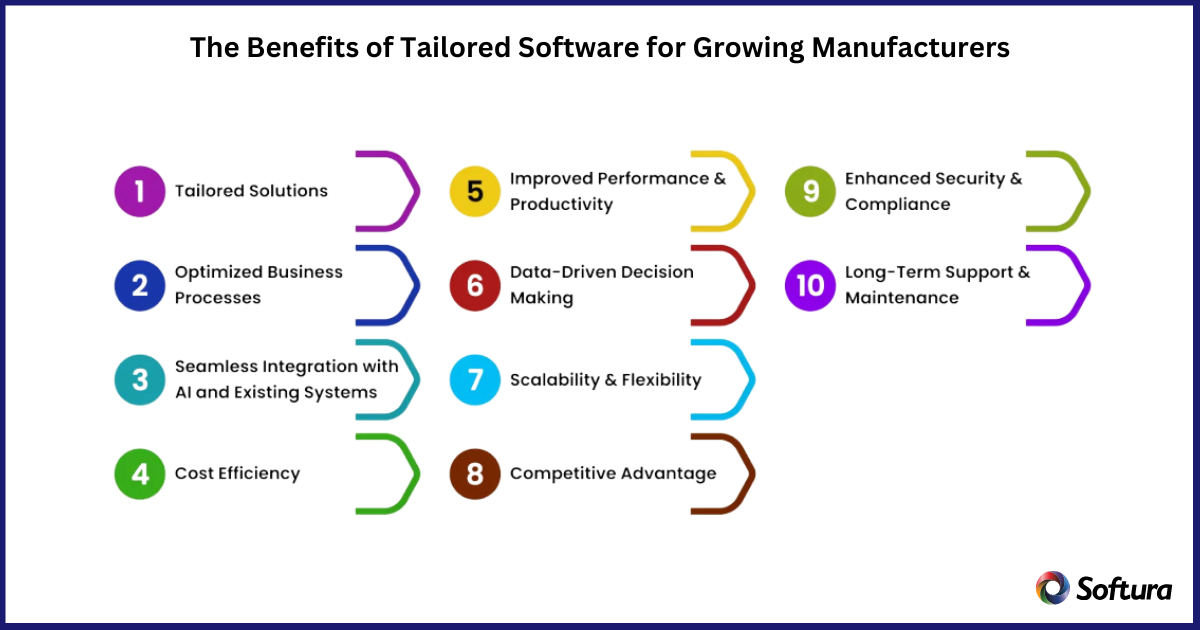
Operational efficiency is a key driver of competitiveness. As manufacturers strive to optimize workflows, reduce production costs, and improve product quality, custom software solutions have become indispensable. Off-the-shelf software can often fall short of meeting the specific requirements of a factory's unique machinery, processes, or business models. Custom solutions, however, are designed to integrate seamlessly with existing systems, offering an unparalleled degree of flexibility, scalability, and precision. Here’s how custom software is transforming the way manufacturing processes are streamlined, with real-world use cases illustrating its potential impact.
Manufacturers rely on complex workflows that involve numerous stages, from raw material procurement to final product assembly and packaging. A lack of automation in these workflows can lead to inefficiencies, errors, and delays. Custom software solutions enable workflow automation, allowing manufacturers to automate repetitive tasks and create a seamless flow of information between departments.
For example, custom ERP (Enterprise Resource Planning) software can be developed to automate inventory management, order processing, and procurement. When stock levels run low or production schedules change, the system can automatically trigger alerts or reorder materials, ensuring that production continues without interruption. This automation minimizes human intervention, reduces errors caused by manual data entry, and accelerates decision-making.
Use Case: A large automotive manufacturer could implement a custom ERP system to automate its supply chain operations. The software could integrate with real-time inventory data and vendor systems, ensuring parts arrive on time and preventing assembly line delays. This would significantly reduce stockouts and eliminate costly production halts due to material shortages, increasing production efficiency and reducing lead times.
Machine downtime is one of the most significant contributors to lost productivity in manufacturing. Custom software solutions, especially when integrated with Internet of Things (IoT) sensors, can facilitate predictive maintenance, a proactive approach that anticipates equipment failures before they happen. By monitoring machine health in real time, custom software can analyze sensor data (temperature, vibration, pressure) and predict wear and tear on critical components.
When an anomaly is detected, the software can trigger maintenance alerts, schedule repairs, or even automatically order replacement parts. This predictive capability minimizes unplanned downtime, extends the lifespan of machinery, and improves overall production efficiency.
Use Case: A manufacturer operating a smart factory could integrate custom software with IoT sensors to continuously monitor the health of CNC (Computer Numerical Control) machines. The software could use predictive analytics to forecast when a machine’s spindle needs maintenance, allowing the maintenance team to perform repairs during scheduled downtimes instead of reacting to sudden breakdowns. This would reduce downtime by up to 40%, enhancing production capacity and reducing costs associated with unplanned disruptions.
Manufacturers often operate a variety of software systems for different purposes—inventory management, production scheduling, quality control, and more. However, these systems are often disjointed, leading to data silos, miscommunication, and inefficiencies. Custom software can centralize operations by integrating all the disparate systems into a single platform, providing a unified view of the entire production process.
For instance, a custom-built Manufacturing Execution System (MES) can integrate with ERP and PLM (Product Lifecycle Management) systems, giving real-time insights into production schedules, equipment status, and product quality. By centralizing data, the system ensures that decision-makers always have access to accurate, up-to-date information, allowing them to make faster, more informed choices.
Use Case: A textile manufacturer could implement a custom MES solution that integrates both production machinery and inventory management systems. This integration would provide real-time visibility into production status, allowing plant managers to adjust schedules dynamically based on available materials and machine performance. The result would be reduced lead times, enhanced production flow, and a significant increase in throughput, improving both productivity and profitability.
Custom software enables real-time analytics to continuously monitor and optimize manufacturing processes. Unlike off-the-shelf solutions that often offer limited analytics, custom solutions are built to track key performance indicators (KPIs) specific to the manufacturer’s needs whether it’s production efficiency, waste reduction, or quality control. By continuously analyzing production data, manufacturers can pinpoint inefficiencies, identify bottlenecks, and fine-tune operations to achieve optimal performance.
A custom software platform can aggregate data from various sources, such as machines, employees, and inventory systems, and present it in actionable insights through dashboards and reports. This empowers plant managers and engineers to make immediate adjustments to processes, optimizing resources and maximizing output.
Use Case: A food processing company could integrate custom software to collect real-time data on temperature, humidity, and production line speed. Using advanced analytics, the system could flag minor fluctuations in humidity that might lead to increased product spoilage, allowing immediate corrective actions. By adjusting climate controls based on this data, the company could reduce waste by up to 20%, improving overall product quality without disrupting production schedules.
Every manufacturing operation is unique, with specific processes, machinery, and production requirements that may not fit into a "one-size-fits-all" software solution. Custom software allows manufacturers to tailor the system to their specific needs. Whether it’s configuring workflows, integrating with legacy equipment, or creating specialized features, custom solutions provide the flexibility needed to adapt to complex manufacturing processes.
For instance, a manufacturer that produces highly customizable products might need a system that can handle complex configurations and production runs. Custom software can be designed to accommodate multiple product variants, track individual orders, and adjust production schedules dynamically to handle variable demand.
Use Case: A bespoke furniture manufacturer could develop a custom order management system that tracks unique customer orders requiring special configurations (size, color, material). The software could streamline the design-to-production workflow by integrating directly with the factory’s equipment, ensuring each order is processed efficiently and accurately. This would significantly reduce order processing time, eliminate fulfillment errors, and improve customer satisfaction, all while maintaining high production flexibility.
"Our integration with the Google Nest smart thermostats through Aidoo Pro represents an unprecedented leap forward for our industry."
- Antonio Mediato, founder and CEO of Airzone.
In the fast-paced world of modern manufacturing, making decisions based on real-time data is essential for maintaining efficiency and optimizing operations. Custom software is designed to integrate and analyze data from various sources such as machines, sensors, and production systems providing valuable insights that lead to smarter, data-driven decision-making.
Key benefits of custom software for real-time data analytics include:
By enabling continuous data monitoring and rapid response capabilities, custom software helps manufacturers stay ahead of issues, improve performance, and make more informed strategic decisions.
"By analyzing the data from our connected lights, devices and systems, our goal is to create additional value for our customers through data-enabled services that unlock new capabilities and experiences."
- Harsh Chitale, leader of Philips Lighting’s Professional Business.
As manufacturers grow and face evolving market demands, their software systems must adapt to new challenges. Custom software offers unparalleled flexibility and scalability, allowing manufacturers to fine-tune their systems to meet current needs while preparing for future growth. Unlike off-the-shelf solutions, tailored software can evolve as the business expands, enabling smoother transitions as operations scale.
Below is a comparison table that highlights how custom software provides key benefits for growing manufacturers:
In a globalized, fast-paced manufacturing environment, seamless collaboration and real-time communication across the supply chain are essential for ensuring smooth operations. Custom software plays a pivotal role in improving connectivity and facilitating collaboration between manufacturers, suppliers, distributors, and other stakeholders. Here's how bespoke software can enhance supply chain dynamics:
Custom software enables a single source of truth by consolidating information from various touchpoints across the supply chain. With real-time data integration, all partners, from raw material suppliers to distributors, can access the same up-to-date information regarding inventory levels, production schedules, and delivery timelines.
Benefit: This centralized data access reduces miscommunication and ensures all parties are aligned, eliminating delays caused by outdated or incorrect information.
Custom solutions can automate the process of order management, inventory tracking, and delivery logistics. Automated workflows ensure that orders are processed without manual intervention, and stakeholders are instantly notified of changes or delays.
Benefit: This enhances visibility across the supply chain and allows companies to react in real-time to any disruptions, improving overall responsiveness and reducing lead times.
Custom software can integrate directly with suppliers’ systems, allowing for automated ordering, real-time stock updates, and immediate issue resolution. This deep system integration facilitates a smoother relationship with suppliers and fosters collaborative planning for demand forecasting and material procurement.
Benefit: Real-time visibility into supplier inventory and production schedules allows manufacturers to plan more efficiently and reduce the risk of stockouts or overstocking.
Bespoke software can offer collaboration tools built directly into the platform—such as secure messaging, shared calendars, and project management tools. These tools enable manufacturers to easily communicate with suppliers, distributors, and internal teams.
Benefit: By reducing the need for external communication tools, custom software ensures that conversations and decisions are logged in one place, improving accountability and reducing the risk of miscommunication.
Custom software facilitates real-time data analytics across the entire supply chain, providing actionable insights that improve decision-making. By analyzing data from suppliers, production lines, and logistics partners, manufacturers can optimize stock levels, forecast demand, and plan for future production needs more accurately.
Benefit: Data-driven insights enable proactive decision-making, reducing inefficiencies and improving resource allocation throughout the supply chain.
For companies that operate globally, custom software can scale to meet the needs of multi-region supply chains. From tracking shipments across different continents to managing suppliers in multiple countries, custom solutions offer flexibility to accommodate diverse regulations, time zones, and logistics needs.
Benefit: As businesses expand, the software can adapt to new suppliers, distributors, and regulatory requirements, ensuring seamless operations as the company grows globally.
Custom software isn’t just a tool—it’s a strategic asset that drives efficiency, flexibility, and innovation across every facet of manufacturing operations. By tailoring solutions to a manufacturer’s specific needs, businesses can streamline processes, enhance collaboration, and leverage data to make smarter, real-time decisions. The ability to scale, integrate seamlessly with existing systems, and respond quickly to market demands makes custom software an indispensable resource for manufacturers aiming to stay competitive.
If you're looking to elevate your manufacturing operations with a tailored software solution, Softura offers deep expertise in Custom Software Development, creating scalable, adaptable, and innovative solutions that transform business performance. Let us help you stay ahead in a rapidly evolving industry—contact Softura today to discover how we can unlock your manufacturing potential.
Unlock Efficiency with Tailored Solutions
Build smarter manufacturing systems that connect operations, boost productivity, and drive innovation.