Legacy application modernization delivers measurable business outcomes including: a 30–45% reduction in IT maintenance and operational costs, 3× faster application delivery cycles, enhanced security and regulatory compliance, improved scalability for business growth, and workforce productivity gains from modern, user-friendly interfaces. Organizations also gain the ability to integrate AI and automation capabilities that legacy architectures simply cannot support.
Timelines vary based on application complexity, dependencies, and business priorities. Most organizations begin to see measurable progress within the early phases of a structured, phased approach. A typical mid-sized enterprise application portfolio (10–20 applications) can be modernized over a period of several months to over a year, depending on scope and strategy.
Softura’s Discovery Session provides a detailed, phased roadmap with clear timelines tailored to your specific environment, ensuring minimal disruption and predictable outcomes.
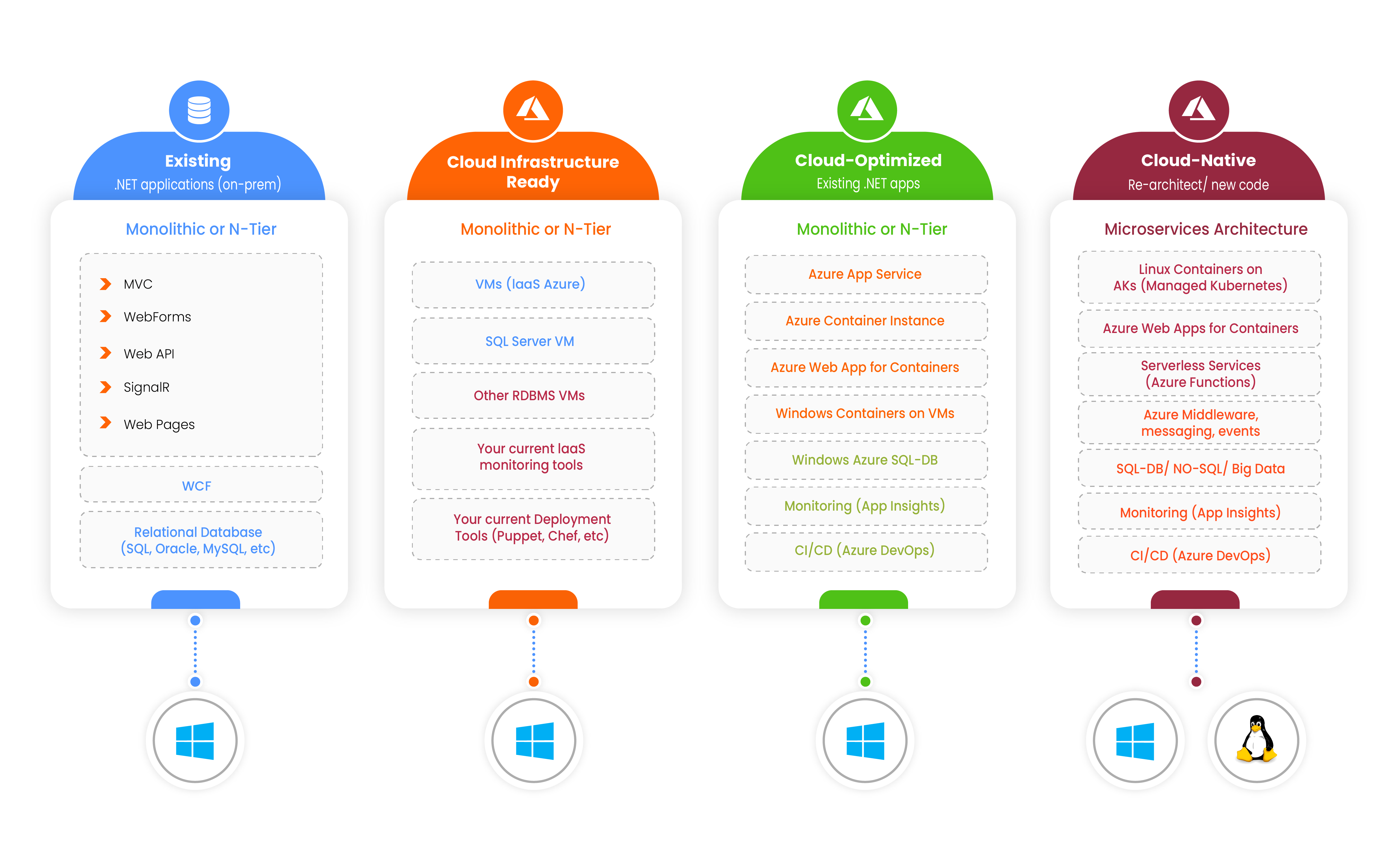
The five primary modernization strategies — often called the "5 Rs" — are: Rehost ("lift and shift" to cloud infrastructure with minimal changes), Refactor (minor code modifications for cloud optimization), Rearchitect (significant code changes to adopt cloud-native patterns), Rebuild (redevelop the application from scratch using modern technology), and Replace (retire the legacy application in favor of a cloud-native SaaS alternative). Softura evaluates each application individually to determine the right strategy based on business value, technical complexity, and cost.
Modern cloud-based applications provide the resilience and agility that volatile markets demand. They enable remote and hybrid workforce access, support rapid scaling during demand spikes, and provide the data infrastructure needed to deploy AI, automation, and real-time analytics. Organizations that modernized before or during major disruptions — including the COVID-19 pandemic — were significantly better positioned to adapt, cut costs, and capture market share from competitors still burdened by legacy constraints.